
Train Hard, Recover Smarter: How Hot Tub Therapy Supports Athletic Recovery
Every serious athlete—whether you’re logging miles on the trails above Longmont, grinding through early morning lifting sessions, or playing competitive recreational sports on weekends—eventually runs into the same wall: recovery. You can do everything right in your training and still hold yourself back by underinvesting in what happens after the workout ends. Muscle soreness, stiffness, fatigue, and the slow accumulation of wear are what separate people who train consistently from people who train in cycles interrupted by burnout and minor injuries.
At Mountain Mist Spa & Sauna, we work with a lot of active people who come in asking whether a hot tub can genuinely make a difference in how they recover—not just feel better in the moment, but actually get back to training faster and stay healthier over time. The answer, grounded in real physiology and backed by research, is yes. Here’s how it works and how to use it well.
What’s Actually Happening During Hot Tub Recovery
Warm water immersion isn’t passive relaxation dressed up with health claims. It triggers specific, well-documented physiological responses that directly support the processes your body needs to recover from training stress.
Heat causes your blood vessels to dilate, significantly increasing circulation throughout your body. For muscles that have just been worked hard, that enhanced blood flow accelerates two things simultaneously: delivery of oxygen and nutrients needed for tissue repair, and clearance of metabolic byproducts—lactate, inflammatory compounds, cellular waste—that accumulate during intense exercise and contribute to that heavy, aching soreness that lingers after hard sessions. The faster your body clears and replenishes, the faster recovery progresses.
Heat exposure also elevates heat shock proteins—specialized molecules that protect cells under stress and assist in protein synthesis. This cellular-level response actively supports muscle repair and may enhance training adaptations over time, meaning regular hot tub use could contribute not just to feeling better but to getting more out of your training.
Buoyancy is the element that distinguishes water immersion from every other heat therapy. With roughly 90 percent of your body weight offloaded in chest-deep water, your muscles and joints experience a level of decompression and genuine rest that simply isn’t achievable on land. Compressed tissues open up, circulation improves in previously restricted areas, and the nervous system gets a genuine signal that the physical demands have stopped. Many athletes describe the feeling of floating in warm water after a hard session as unlike anything else in their recovery toolkit.
Managing Delayed Onset Muscle Soreness
DOMS—the deep, movement-limiting soreness that peaks one to two days after intense training—is the most immediate obstacle between hard workouts and consistent training frequency. Some soreness is a normal sign of productive training stimulus, but excessive DOMS that keeps you stiff and limited for three or four days cuts into your ability to train well and often.
Research on hot water immersion for DOMS shows meaningful benefits, particularly when timing is used thoughtfully. Soaking two to six hours after an intense session—after the initial inflammatory response has begun but before stiffness fully sets in—tends to produce the best results. A 15 to 20 minute soak in that window can noticeably reduce next-day soreness and shorten the overall recovery window, letting you return to quality training sooner.
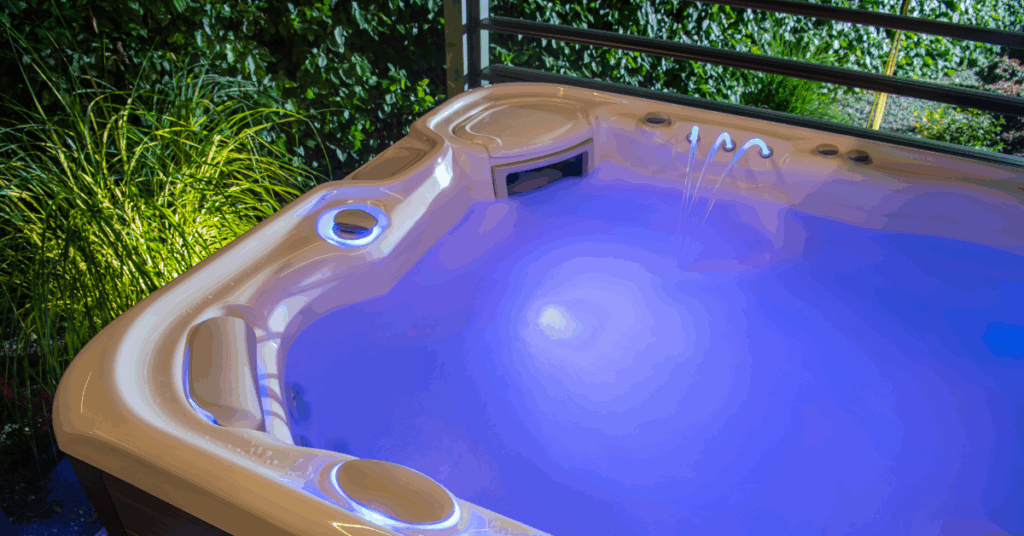
Hydrotherapy jets add targeted massage to the equation. The pulsating pressure breaks up the muscle knots and adhesions that form during the repair process, preventing the chronic tightness that can quietly alter movement patterns and raise injury risk over time. When you’re choosing a hot tub with athletic recovery in mind, jet coverage across the major muscle groups—legs, back, shoulders, hips—matters more than total jet count.
Recovery Needs by Training Type
Different training demands create different recovery challenges, and hot tub therapy can be adapted to address each one.
Endurance Athletes
Runners, cyclists, and triathlon athletes deal with the cumulative fatigue that builds from repetitive, prolonged loading. The legs and lower body take the most stress, and maintaining tissue pliability across high training volumes is a constant challenge. Chronic tightness in the calves, hamstrings, hip flexors, and IT band can gradually shift gait and mechanics in ways that lead to overuse injuries.
Regular hot tub use helps endurance athletes maintain flexibility and tissue quality alongside their training load. The mental recovery dimension is also meaningful—long training sessions tax the nervous system and psychological reserves alongside the muscles, and the genuine relaxation that warm water provides helps restore mental freshness between sessions.
Strength and Resistance Training
Heavy lifting creates intense mechanical stress and substantial muscle damage that requires adequate recovery time to translate into strength gains. The challenge for strength athletes is that the high tissue stress that drives adaptation also demands longer recovery—and insufficient recovery between sessions stalls progress and raises injury risk.
Hot tub therapy helps strength athletes recover more completely between training days by reducing muscle tension and improving the circulation that delivers nutrients for protein synthesis. Targeting specific muscle groups with jets after a heavy session—quads and hamstrings after a squat day, upper back and shoulders after pulling work—can meaningfully reduce next-session stiffness and help maintain range of motion.
HIIT and CrossFit-Style Training
High-intensity interval training generates both muscular and metabolic fatigue in short windows. The lactate and metabolic byproducts that accumulate during intense intervals are part of what produces the burning, heavy sensation that can linger for hours. Enhanced circulation from hot water immersion accelerates the clearance of these compounds, reducing that residual fatigue and allowing athletes who train frequently to maintain higher quality across sessions without accumulating excessive fatigue.
Team Sports and Recreational Competition
Weekend athletes playing softball, soccer, basketball, or tennis face the particular challenge of variable, unpredictable physical demands without the structured recovery programming of dedicated training athletes. A 20-minute soak after a game can clear much of the soreness that would otherwise make Monday miserable, and the mental decompression from competitive stress is a genuine benefit that supports readiness for the next session.
Contrast Therapy: Pairing Heat with Cold
Many serious athletes take recovery a step further by alternating between hot water immersion and cold exposure—a protocol called contrast therapy. The alternating vasodilation from heat and vasoconstriction from cold creates a vascular pumping effect that may enhance circulation and metabolic waste removal beyond what either temperature achieves alone.
A typical contrast protocol runs three to four cycles of three to four minutes in hot water followed by one to two minutes of cold exposure, ending on cold to help reduce inflammation before finishing the session. Research results on contrast therapy are mixed, but many athletes report strong subjective benefits that make it a regular part of their routine.
If you’re interested in building a full contrast therapy setup, Mountain Mist Spa & Sauna can help you think through pairing options that complement the hot tub models we carry—creating a dedicated recovery station rather than just a single piece of equipment.
Getting the Timing and Protocol Right
Consistency and thoughtful timing are what separate occasional relief from a recovery system that actually compounds over time.
When to Soak
For moderate training days, soaking shortly after finishing works well. For your heaviest, most intense sessions—particularly those aimed at maximum strength or hypertrophy—there’s a reasonable case for waiting three to six hours before heat therapy. The acute inflammatory response immediately following intense training plays a role in triggering adaptation, and suppressing it immediately with heat may theoretically reduce some of that signal. For most recreational athletes, this distinction matters far less than simply being consistent. Pick a schedule that fits your life and stick with it.
Duration and Temperature
Fifteen to twenty minutes is the well-supported sweet spot. Longer sessions don’t deliver proportionally more benefit and can introduce cardiovascular stress or dehydration that works against recovery. Temperature in the range of 100 to 104 degrees Fahrenheit provides strong therapeutic response without excessive strain. If you’re doing longer or more frequent sessions, 98 to 100 degrees may be more sustainable.
Hydration is non-negotiable. Exercise already depletes fluids; heat exposure accelerates that further. Keep water within reach and drink before, during, and after every session. Dehydration undermines every mechanism that makes hydrotherapy effective.
Moving in the Water
Passive soaking is beneficial, but gentle active recovery in the water extends the benefit. The buoyant environment makes range-of-motion work accessible that would be too uncomfortable on land—slow leg swings, ankle rotations, arm circles, hip circles. Water’s light resistance promotes blood flow without adding meaningful stress to fatigued tissue. Many athletes develop personalized sequences targeting their individual tight spots: IT bands for runners, hip flexors for cyclists, rotator cuffs for overhead athletes.

The Long Game: Injury Prevention and Training Longevity
The cumulative benefit of consistent hot tub use over months and years of training is arguably more valuable than the acute recovery after any individual session. Chronic muscle tightness and restricted mobility quietly build biomechanical compensations that raise injury risk—most overuse injuries don’t happen suddenly, they develop through gradual tissue stress on areas that have lost normal flexibility and movement quality.
Regular heat therapy maintains tissue pliability and joint range of motion, addressing the root conditions that make overuse injuries more likely. Combined with the improved sleep quality and reduced psychological stress that come with regular hydrotherapy, the result is an athlete who is more resilient and consistent over time—not just better recovered after individual sessions.
The athletes who train the most effectively over the long run aren’t always the ones who push hardest. They’re the ones who recover well enough to keep training at quality, week after week, without accumulating the breakdown that sidelines people who train hard but recover poorly.
What to Look for in a Recovery-Focused Hot Tub
If athletic recovery is your primary use case, a few features are worth prioritizing when you’re comparing models.
Jet Power and Coverage
For deep muscle therapy, jet pressure and strategic placement matter more than raw jet count. Look for dedicated coverage across the legs, lower back, mid-back, shoulders, and ideally the feet and calves—the zones that take the most training stress for most athletes. Variable pressure settings let you adjust from gentle to intense depending on how your body feels on a given day.
Full Immersion Seating
Lounge-style seats that allow you to recline fully maximize spinal decompression and let your entire body benefit from buoyancy and heat simultaneously. Multiple seating positions give you flexibility to target different muscle groups during the same session.
Energy Efficiency
If you’re using a hot tub daily or near-daily for training recovery, operating cost becomes a real consideration. Well-insulated models with efficient heating systems hold temperature steadily between sessions without constant reheating, reducing monthly utility costs significantly. At Mountain Mist Spa & Sauna, we can walk you through the efficiency specs on any model so you can weigh long-term costs alongside the upfront investment.
Recovery Is Part of Training
The athletes who get the most out of their training over the long term are the ones who take recovery as seriously as the work itself. Hot tub hydrotherapy offers a research-backed, multi-mechanism approach to recovery that fits into a daily routine without requiring extra time at a facility or scheduling around someone else’s availability. It’s there when you need it, as often as you need it.
If you’re ready to explore what a recovery-focused hot tub setup could look like, come visit us at Mountain Mist Spa & Sauna at 1240 Ken Pratt Blvd #4 in Longmont. Try the seats, feel the jets, and let’s talk through what makes sense for how you train. Your body does the hard work—give it the recovery it deserves.